
Second Life: A 3-D Space for Virtual Meetups and Instruction?
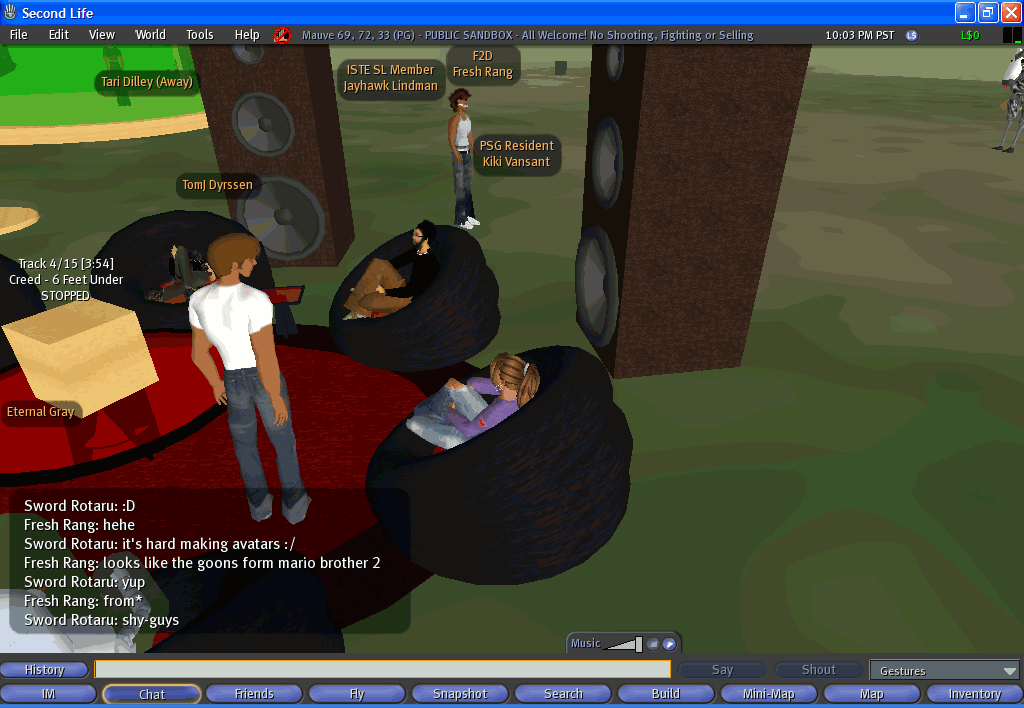
Second Life provides a virtual world you can explore as a video game character walking around and interacting with other game characters. You use your keyboard's arrow keys to move, and you can even fly. You feel as if you're in a video game, because you select an avatar (3-d character), and everyone else is represented by avatars as well, mostly provocatively dressed. Thousands of others are also participating, and it's an experience like no other.
Bryan Person and Jay Moonah at Podcamp Toronto presented enthusiastically about Second Life (see "It Isn't Just a Video Game: Second Life for Event"), and they included a graphical slideshow with scenes of Second Life. Person and Moonan say they used Second Life for a virtual podcasting meetup, and it went well. Many other groups have meetups in Second Life, and regular events are held, some with live audio. Businesses even have space to present their products.
After my virtual chat experience with the Suncoast chapter, I started wondering if Second Life might provide a better venue for virtual meetups, even for virtual seminars and webinars. Second Life is certainly cooler looking, and more exciting than a regular chat room. But ...
Second Life is also lame. The objective is ambiguous, and it's littered with gambling and adult content. Lots of people stand around doing nothing, and others make their avatars dance endlessly. If you dance in some areas, you can receive pay in Linden dollars, which have actual buying power. The whole project is created by Linden Labs in Seattle.
Darren Barefoot has written about Second Life a bit. In one post he says,
Like all MMPORGs (though several people have asserted to me that Second Life isn't a game), I found its lack of clear objectives frustrating and got bored pretty quickly. Also, and this will be an unpopular opinion, it was ugly, cluttered and incredibly laggy.
MMPORGs stands for "massive multiplayer online role-playing game." Some educators think if they can spin their classes as games, making them as appealing as World of Warcraft, students will actually do their homework.
If your e-learning courses are virtual worlds that users can explore as games, users might be more engaged with the instruction. Still, my thoughts toward Second Life are mixed. It consists of a lot of standing around, wondering where to go, what to do.
Darren Barefoot created a satire of Second Life called "Get a First Life," which appeared on Digg. Barefoot calls attention to how pathetic it can be to spend hours and hours each day in a virtual world, ignoring the real world around you.
Barefoot also references some Gartner research that indicates the Second Life hype has reached its peak:
AR: What happens when Second Life begins to fall from the peak of expectations described in the Hype Cycle?
SP: We will see a level of disillusionment, caused partially by difficult of scaling the infrastructure to cope with new people, partially by a sense of dissatisfaction as the perceived level of reality falls behind that which is becoming the norm in the home entertainment environment.
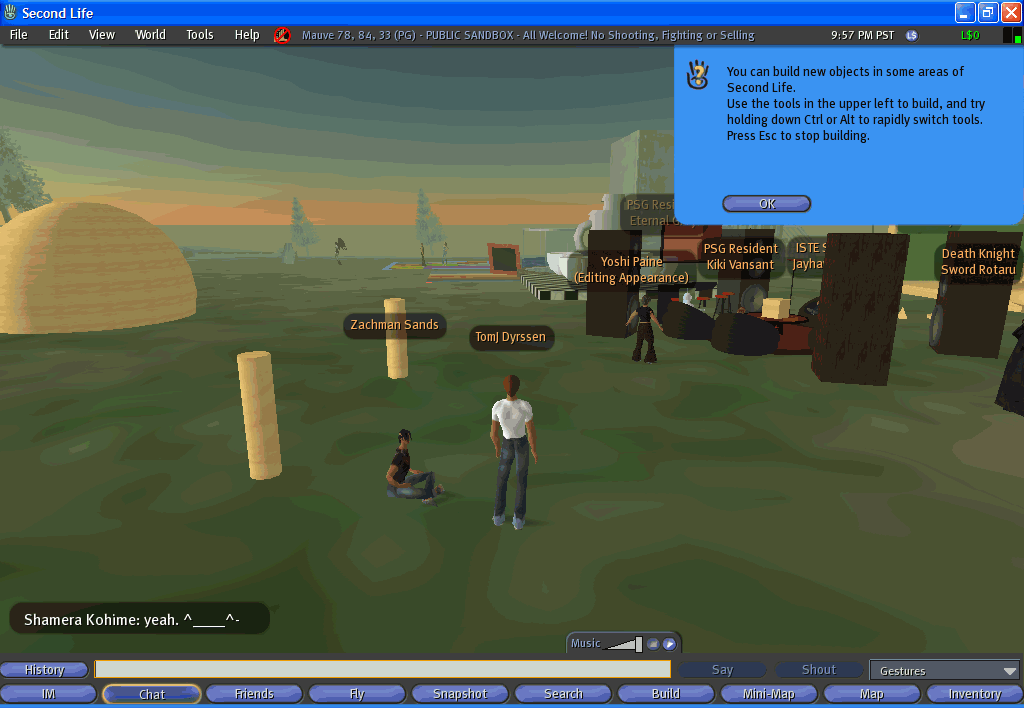
My first experience exploring Second Life was one of confusion. I wandered around asking people what I was supposed to be doing. Others seemed not to do anything at all. After a two-minute superficial chat with another character, he explained that it was the most conversation he had in 4 and a half hours. What! What are people doing if they're not chatting? I learned they're editing their appearance, building things, exploring virtual spaces — I guess. I did not enter the gambling rooms, nude beaches, or other "adult" areas.
One problem with Second Life is that you really don't need an avatar to chat with others. You don't need to represent yourself visually and walk around. If you're attending an event, you don't need to walk up to other participants and ask them questions. It's neat, but unnecessary and sometimes technically challenging. Still, I wouldn't dismiss Second Life. It has potential. If you know of cool events going on in Second Life, or worthwhile meetups, let me know. I might visit it again. Look for "TomJ Dyrussen" (my avatar's ridiculous name).
About Tom Johnson

I'm an API technical writer based in the Seattle area. On this blog, I write about topics related to technical writing and communication — such as software documentation, API documentation, AI, information architecture, content strategy, writing processes, plain language, tech comm careers, and more. Check out my API documentation course if you're looking for more info about documenting APIs. Or see my posts on AI and AI course section for more on the latest in AI and tech comm.
If you're a technical writer and want to keep on top of the latest trends in the tech comm, be sure to subscribe to email updates below. You can also learn more about me or contact me. Finally, note that the opinions I express on my blog are my own points of view, not that of my employer.